
Hand & Wrist Surgery in Syracuse, NY
Nathan G. Everding, MD | Hand & Wrist Specialist
Specialized Hand & Wrist Surgery in Central New York
Nathan G. Everding, MD is a board-certified and fellowship-trained orthopedic surgeon specializing in hand and wrist surgery. Hand and wrist conditions can result from acute injuries, repetitive use, arthritis, nerve compression, and degenerative changes.
Dr. Everding provides comprehensive evaluation and treatment for all hand and wrist conditions. He combines advanced surgical techniques with conservative management approaches to restore function, reduce pain, and help patients return to their normal activities throughout Central New York.
Hand & Wrist Anatomy
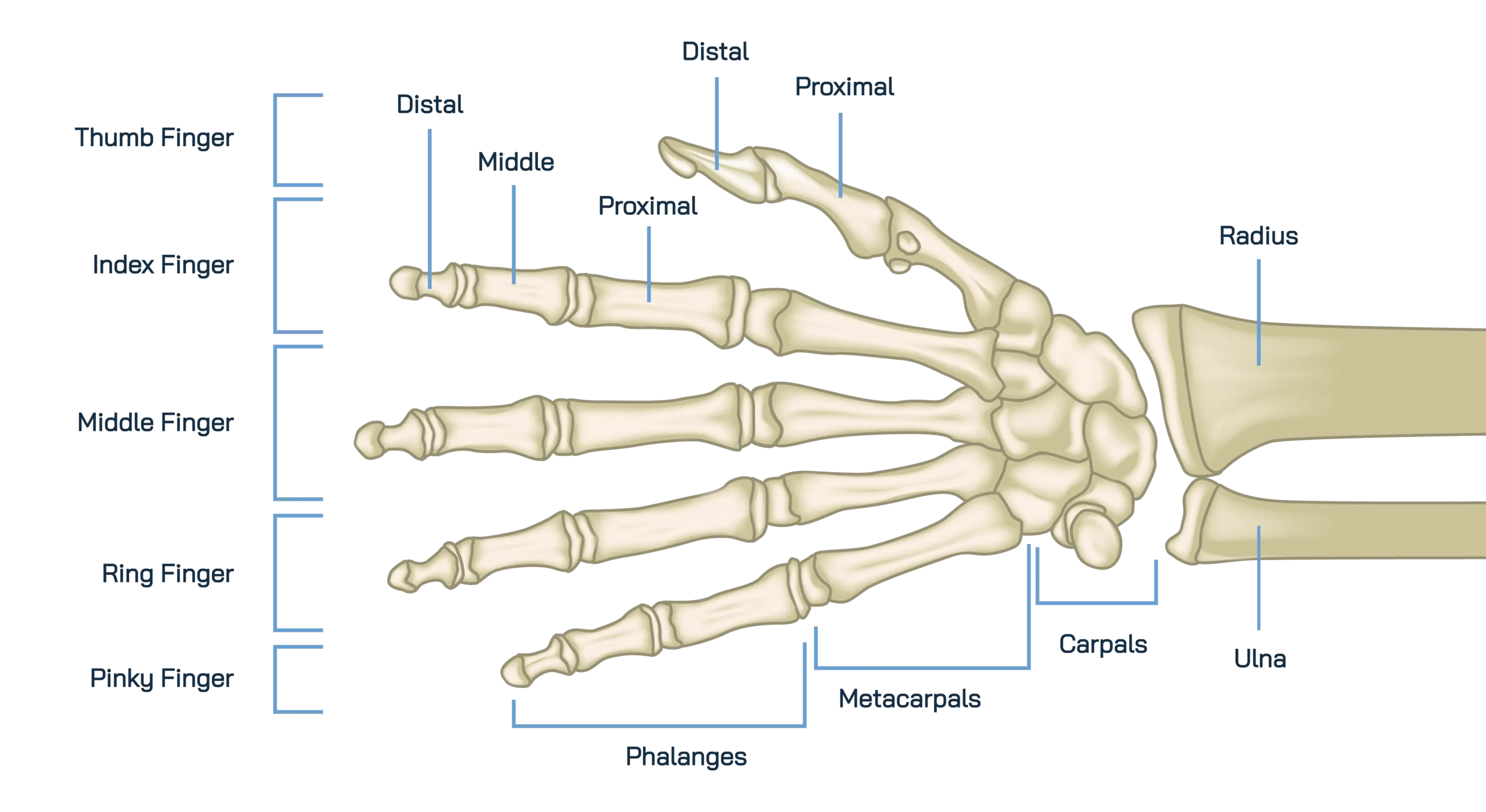
The hand and wrist form one of the most complex structures in the human body. The wrist contains eight small carpal bones arranged in two rows. Five metacarpal bones form the palm, and fourteen phalanges create the fingers and thumb. This intricate system of 27 bones works together through multiple joints. Numerous tendons control finger and wrist movement, while ligaments provide stability. Three major nerves supply sensation and motor function: the median, ulnar, and radial nerves. Small blood vessels nourish all these structures.
The hand and wrist enable countless daily activities requiring both strength and precision. Even minor injuries can significantly impact function. This complexity demands specialized knowledge for accurate diagnosis and effective treatment of hand and wrist conditions.
Common Hand & Wrist Conditions
Carpal Tunnel Syndrome
Carpal tunnel syndrome develops when the median nerve becomes compressed as it passes through the wrist. Symptoms include numbness and tingling in the thumb, index, middle, and ring fingers, hand weakness that makes it difficult to grip objects, and pain that often worsens at night. Many patients wake with numb hands and must shake them to restore sensation. Symptoms may radiate up the forearm. Fine motor tasks like buttoning clothes become challenging.
Treatment begins with conservative measures. Wrist splints keep the wrist in a neutral position, especially at night, reducing pressure on the nerve. Activity modification avoids positions or repetitive movements that worsen symptoms. Anti-inflammatory medications may provide relief. When conservative treatment fails or nerve compression is severe, carpal tunnel release surgery is highly effective. This procedure enlarges the carpal tunnel by cutting the ligament that forms its roof.
Recovery from surgery typically takes several weeks for initial healing. Most patients experience significant symptom improvement within a few months as the nerve recovers.
Trigger Finger
Trigger finger occurs when inflammation narrows the sheath surrounding a finger tendon. Symptoms include the finger catching or locking in a bent position, stiffness especially in the morning, a painful clicking sensation when moving the finger, and difficulty straightening the affected digit. A tender bump may be felt at the base of the finger. The condition often affects the ring finger or thumb but can involve any digit. Symptoms typically start mild and gradually worsen.
Treatment begins with conservative approaches. Resting the affected finger and avoiding repetitive gripping allows inflammation to decrease. A splint may keep the finger straight during healing. Gentle exercises maintain motion without aggravating the condition. Anti-inflammatory medications reduce swelling. Multiple injections may be needed in some cases. When symptoms persist despite conservative treatment, surgical release of the constricted tendon sheath provides definitive treatment.
Recovery from trigger finger release surgery is relatively quick. Most patients regain normal finger function within a few weeks and can return to regular activities shortly after the procedure.
Wrist Fractures
Wrist fractures commonly involve the radius bone near the wrist joint. Symptoms include immediate pain at the injury site, rapid swelling, visible deformity of the wrist, and severe difficulty moving the hand and wrist. Bruising develops over the following days. Numbness or tingling may indicate nerve involvement. The hand often appears tilted or angled abnormally.
Treatment depends on fracture alignment and stability. Non-displaced or minimally displaced stable fractures may be treated with casting. The cast immobilizes the wrist for four to six weeks while the bone heals. Regular follow-up ensures the fracture maintains proper position. Displaced or unstable fractures require surgical fixation. Plates and screws or pins hold the bones in correct alignment during healing. This allows earlier motion and better functional outcomes.
Recovery varies based on treatment method. Cast treatment requires six to eight weeks of immobilization followed by therapy to restore motion and strength. Surgical treatment may allow earlier mobilization but requires three to six months for complete healing and return to demanding activities.
Thumb Arthritis (Basal Joint Arthritis)
Thumb arthritis affects the joint at the base of the thumb where it meets the wrist. Symptoms include pain with gripping, pinching, or twisting motions, weakness that makes opening jars or turning keys difficult, swelling at the base of the thumb, and limited range of motion. A bony prominence may develop at the affected joint. The pain typically worsens throughout the day with use. Simple tasks like writing or using utensils become painful.
Treatment starts with conservative options. Activity modification and adaptive devices reduce stress on the arthritic joint. Splinting provides support and limits painful motion. Anti-inflammatory medications and topical treatments decrease pain. Physical therapy maintains motion and strengthens surrounding muscles. When conservative treatment no longer controls symptoms, several surgical options exist. Procedures range from joint reconstruction to fusion or replacement.
Recovery from thumb arthritis surgery requires several weeks of immobilization followed by progressive therapy. Most patients achieve significant pain relief and improved function within three to six months, though complete healing continues for up to a year.
De Quervain's Tenosynovitis
De Quervain’s tenosynovitis is inflammation of tendons on the thumb side of the wrist. Symptoms include pain and swelling along the thumb side of the wrist, difficulty gripping or pinching, pain with thumb and wrist movements especially when making a fist, and tenderness over the affected tendons. The pain often radiates up the forearm or down into the thumb. New mothers frequently develop this condition from repetitive lifting. Symptoms typically worsen with activities involving thumb use.
Treatment begins with conservative measures. Rest and activity modification allow inflammation to decrease. A splint immobilizes the thumb and wrist to reduce tendon irritation. Ice applications and anti-inflammatory medications control pain and swelling. Physical therapy includes gentle stretching and techniques to reduce inflammation. If conservative treatment fails after several months, surgical release of the constricted tendon sheath may be recommended.
Recovery from surgery is relatively straightforward. Most patients return to normal activities within a few weeks with full resolution of symptoms expected within two to three months.
Ganglion Cysts
Ganglion cysts are fluid-filled lumps that develop along tendons or joints of the wrist and hand. Symptoms include a visible bump that may be soft or firm, pain if the cyst presses on a nerve, limited range of motion if the cyst restricts movement, and fluctuation in size over time. Some cysts cause no symptoms beyond the cosmetic appearance. Others create significant discomfort depending on their location. The cyst may feel tender when pressed. Symptoms often vary with activity level.
Treatment depends on whether the cyst causes symptoms. Asymptomatic cysts may simply be observed since many resolve spontaneously. When treatment is desired, aspiration with a needle can drain the fluid. This provides temporary relief, though cysts frequently recur. Surgical excision removes the entire cyst and its connection to the joint or tendon. This offers the lowest recurrence rate.
Recovery from aspiration is immediate with no restrictions. Surgical excision requires a few weeks of limited activity followed by gradual return to normal use. Most patients achieve full recovery within four to six weeks of surgery with low risk of the cyst returning.
Dupuytren's Contracture
Dupuytren’s contracture is a progressive condition affecting the connective tissue beneath the skin of the palm. Symptoms include thickening of the tissue in the palm, development of firm lumps or cords, fingers gradually bending toward the palm, and difficulty straightening the affected fingers. The ring finger and small finger are most commonly involved. Early stages may present only as nodules in the palm without significant finger contracture. As the condition progresses, the fingers become increasingly bent and functional limitations develop. Activities requiring a flat hand become challenging.
Treatment depends on the degree of contracture and functional impairment. Observation is appropriate in early stages when finger function remains good. When contracture interferes with daily activities, several treatment options exist. Needle aponeurotomy uses a needle to break up the contracted tissue. Collagenase injection dissolves the thickened cords. Surgical fasciectomy removes the diseased tissue and provides the most complete correction.
Recovery varies by treatment method. Minimally invasive approaches allow quicker return to activities within a few weeks. Surgical treatment requires more extensive rehabilitation with progressive hand therapy over several months to regain full function and prevent recurrence.
Schedule Your Hand & Wrist Consultation
Dr. Everding provides specialized care for hand and wrist conditions throughout Syracuse and Central New York. Proper diagnosis is essential for effective treatment of these complex structures. Dr. Everding’s fellowship training and experience enable him to offer both conservative and advanced surgical options. Whether you are experiencing pain, numbness, weakness, or limited motion in your hand or wrist, a thorough evaluation identifies the cause and guides treatment planning. Early intervention often prevents minor problems from becoming chronic limitations.
Request an appointment with Dr. Everding to discuss your hand and wrist concerns and develop a personalized treatment plan focused on restoring function and improving your quality of life.